How to Write a Novel in a Month

Hi folks! Since NaNoWriMo is just around the corner, I thought I’d re-post and expand on my piece from earlier this year, How to Write a Novel in Four Weeks.

I wrote the first draft of Hexomancy, the third Ree Reyes novel, in a month and a day (April 14th to May 15th). The draft was 72,326 words, and it was written in twenty-eight days of production (I gave myself Saturdays off to recover, and I had a couple of low-production days).

Hexomancy was written twice as quickly as any novel I’ve written before, and I think the first draft was stronger that any other, as well, partially thanks to the accumulation of experience, but also due to the power of momentum. After the first couple of days, I was averaging 2,800 to 3,300 words a day in two sessions a day of around 45 minutes to 60 minutes each.

Here are some factors that went in to my being able to write a complete, if short, draft in just over a month of calendar time.

1) Hexomancy was the fourth Ree Reyes story, following two novels and a novella. By now, I know the characters, they have pre-existing relationships that I can leverage into lots of tension and sparks, making interpersonal scenes zoom along fairly well. I had a clear vision of what the big concept for the novel was, what the major sub-plot would be, and what the big, explosive ending would be. Those all got me very excited to write the novel, so I started with a ton of energy, writing 15K words in the first week.

2) The series is designed to be light, energetic, and action-packed urban fantasy. Much of the setting is our own world, and most of the rest of the setting I’d already created in previous books in the series. This means I didn’t have to do much world development on top of what I already had, which might slow me down as I have to create whole new systems or settings before moving on with a scene. I broke down the new settings during the outline stage, so I knew enough about each of them to flesh them out on the fly as I wrote. If I were writing sociological SF that was light on action and long on politics, I don’t think I’d have been writing anywhere near as fast. But the important thing was that I was passionate about the story, the characters, and I knew what kind of experience I wanted the reader to have with the story, so I could write to that aesthetic.

3) Most importantly (for me), I outlined the whole novel before I started writing. This was a chapter-by-chapter outline, though some of my chapters were more like beats, as I discovered going through and seeing places where a beat was a chapter, or a chapter turned out to be just a beat. I’ve been outlining more and more for my work, between reading Rachel Aaron’s 2K to 10K, following Chuck Wendig’s TerribleMinds, and perhaps most importantly, taking the Writing on the Fast Track class with Mary Robinette Kowal, which focused on writing fast by outlining and training for better discipline.

4) Writing quickly meant that I always had the story in mind. I was always excited about the story, even on the days when I consciously stepped away to relax and let myself recovery. But I never spent too much time away from the novel, writing six days a week, usually twice a day. And I always left myself clues at the end of any session as to what was going to happen next, by leaving the outline/beats at the bottom of my Scrivener document. That meant that whenever I started a session, I could take three to five minutes to read what I’d last written and to remind myself what was coming next. And from there, it was off to the races.

5) I used a writing soundtrack – this is something I have done for years, and it helps me get into the right frame of mind. If you’re curious, here’s the playlist I used for Hexomancy.


Why Writing Diversely Matters To Me

The Younger Gods is my fourth published novel, but my first with a white male protagonist. This is not a co-incidence – it was a very deliberate choice.

Stories make our world. As a writer, I help tell the stories that people internalize to set their expectations of what the world is, and who is welcome and valid in it. For me, being a writer means including people from diverse backgrounds and lived experiences. To do any less is to erase them from history and deny their existence.

Instead, I aggressively seek out ways to write characters from diverse backgrounds and lived experiences, both to show the breadth of viable lives and perspectives that humanity holds, and to use my disproportionately-favored voice as one with privilege Yatzee (male, straight, white, cisgender, middle class, neurotypical, able, etc.) to bring greater attention to and respect for the diversity of lived experiences in the world.

Writing diversely has been a mission that I embrace whole-heatedly, challenging myself to learn more about the world and about the people in it. I feel that writing diversely greatly enriches my work, helps me avoid cliche and lazy storytelling. In writing diversely, I seek to create stories that people from many different lived experiences can see themselves in, stories that say, “We can all be heroes.”

So, that’s all great in theory, Mike. But do you walk the walk?

In addition to actively casting The Younger Gods in a manner that fits the city’s demographics (numerous African-american characters, Filipino characters, Hispanic characters, South Asian Characters, etc.), I made several conscious casting changes in The Younger Gods – one in the middle of the rough draft, and another change very close to publication. the first change is that the character of Dorothea was originally a man. I wanted my cast to have a better gender balance, and found that writing the Broadway Knight character as a woman was even more interesting for me.

The other changes were the opposite direction, changing a female character to male. In an earlier draft, Jacob’s friend Thomas was his girlfriend, Jennifer – things still went sour after prom, but it was a loss of a romantic partner instead of a platonic friend. The death of Jessica had been part of the character’s story pretty much since the beginning, from when I first had the idea over ten years ago.

But in the process of revisions, I realized that there was no way to keep Jessica in the role without her being an example of Women in Refrigerators (trigger warning: sexualized violence against women). I’d internalized that narrative trend thanks to decades of reading comics and playing video games, etc., and only when I was nose-deep in revisions did I realize that I was replicating it without useful critique or subversion. No matter how I framed the death or demonized it, it was still another Fridging. And I wouldn’t have been proud of the work if I hadn’t made that change. In the conversation I had with my fiance, I had to actively push back the panic and shame I was experiencing about putting a book out with a major fail like that. But thankfully, I was able to make the change, with the support of my editor, Adam Wilson.

The Takeaway

Making that change not only meant that I didn’t have a fridged girlfriend as a motivating factor for my leading character, but what I ended up with was a stronger story overall. Having Thomas in that role – as Jake’s one friend betrayed by his family, sending our hero away from the family – meant that all of the other themes of friendship and alienation throughout the book were enriched by that loss and guilt about Thomas that Jacob felt.

In my experience as a consumer and student of stories, the loss male best friend is a far less common motivating factor for a male character than the loss of a romantic partner. Male friendships are downplayed, contextualized as being ‘bromances,’ often to avoid homosocial/homosexual connotations (because the patriarchy says that gay = effeminate, and since feminine = bad, gay = bad! Thanks, patriarchy! Your logic is as straightforward as it is spurious and toxic). So having Thomas be a major motivator for Jake gave me a new perspective on the story. And I think the novel is stronger for it, since so much of the rest of the novel is about Jacob learning about how to reach out to other people, to build friendships and rely on those friends and allies.

It is not sufficient for me to write only people who look like me, who come from my exact background. Writing diversely gives me challenges, forces me to stretch my writing skills, and creates the opportunity for me to explore the world through the perspective of people who come from and have lived very different lives than I have. I can’t tell other writers that they *have* to write diversely. Even if I did, it’s better for writers to come to that decision for themselves. I think it’s far better to write diversely and to mess up than to be afraid and let that fear of rebuke control you, so that you settle for the easy writing choices and produce another white-washed, overwhelmingly male, white, cisgenger, straight world that Hollywood so often shows us as their ‘default).

Writing Diversity While Playing in Life’s Easy Mode

The weird thing is that my Privilege Yahtzee actually puts me at an advantage even when intentionally writing diversely. I’m more likely to be able to sell a work that has a lot of diversity, than a woman or a person of color is. And once sold, I’m more likely to be lauded for it, as a “brave” or “insightful” or something. All of this, just for meeting a minimum bar of decency that I set for myself. It’s a weird reality, but it seems to be the way of things. And if I can use my privilege to get more stories into the world that acknowledge and celebrate the lived experiences of people from diverse backgrounds, then I will totally do so. And along the way, I’ll also use my privilege to promote the voices and works of people from diverse backgrounds and lived experiences. I can do both, and both make the world better.

Writing diversely, and doing it well, is not easy. I will mess up. I have already messed up, and been called on it, and have taken those comments to heart. But I wouldn’t have learned those lessons, wouldn’t have become better-able to write diversely, if I hadn’t tried.

This is not about fishing for cookies, it is not about white/male/anything guilt.

Here’s what it is:

  • A promise to myself that I won’t settle for my ingrained, lazy defaults as a person who grew up in a culture that’s patriarchal, kyriarchal, racist, and more.
  • A realization that challenging my own assumptions will let me dig deeper and find fresh, more interesting ways of storytelling.
  • A public pledge to tell stories about and for as much of the world as I can, to make sure that I do not erase and ignore people who have been marginalized, oppressed, and erased in/from narratives of all sorts (fictional, historical, etc.).
  • An effort to show other writers who are intimidated by the idea or practice of writing diversely for fear of its difficulty or fear of getting it wrong.

To those writers, let me say this: it’s better, in my eyes, to be a screw-up with good intentions, working (imperfectly) on the side of social justice and inclusion than to take the easy route and let your work perpetuate the crappy, marginalizing and erasure-tastic status quo. Your mileage may vary, but this is where I stand.

When it comes to writing diversely, I am proud of The Younger Gods. I put a lot of time into making sure that it showed a more accurate cross-section of the people who live in actual New York even as I was moving apocalyptic sorcerers, Nephilim, and other super-humans around to chase each other and have fight scenes. I feel that it is a stronger book for being diverse, and I hope you will enjoy it.
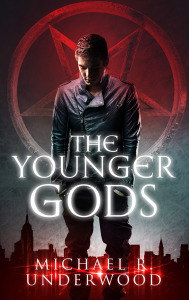
 

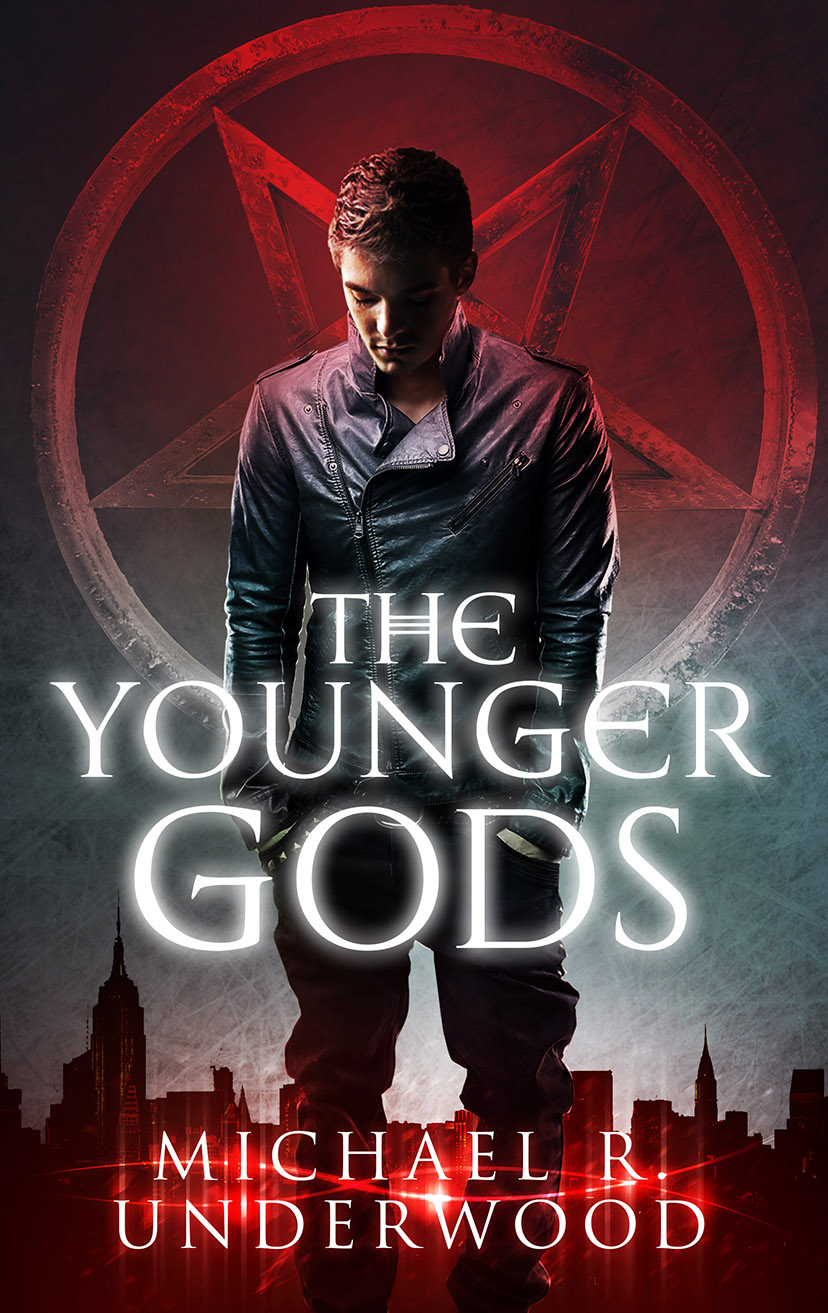
The Younger Gods cover

The Younger Gods PROMONADO round-up

It’s PROMONADO time once again, this time for THE YOUNGER GODS, my new supernatural thriller.

The Younger Gods cover

First, some juicy reviews:

“Underwood has definitely spun himself a web of complex and intriguing characters and plot, and I can honestly say I look forward to reading whatever else he puts out.” – Beans Book Reviews

The Younger Gods features a strong narrative voice, right from the start. From there, the plot moves at a ridiculous pace, in very intentional sort of way.” – Ristea’s Reads

“There’s so much that goes into Jacob as a character, all of these layers and effects and influences are clear in his character making him very real, very complex and very interesting to follow.” – Fangs for the Fantasy

“…a fun and fast paced read that I would recommend to any fan of the paranormal genre that is looking for something a little different.” –Avid Reviews

“During the best moments, the complex supernatural network is reminiscent of what I loved about Neil Gaimen’s Neverwhere; we’re treated to what feels like the tip of the iceberg of a vast and complex world.” – Throw This Book At Me

“The Younger Gods is a solid urban fantasy with an interesting premise and characters you can’t help but get invested in.” – Bibiotropic


On Monday night, I was a guest on the MythWits, talking about all three of my series, plus a game!

I did a Q&A at Fallen Angel Reviews.

Over at the Qwillery, I talk about writing a character with huge blind spots.

And at Mary Robinette Kowal’s journal, I share My Favorite Bit of THE YOUNGER GODS.


From Page to Panel, Part One

A couple of weeks back, I attended my first Baltimore Comic-Con. It clocked in at around 15,000 people, and unlike the bigger Comic-Cons (NYCC or PHXCC) that I’ve attended, Baltimore was still very much focused on comics.

After two days of panels, browsing, meeting creators, and loading my bags down with glorious comics goodness, I should have expected this to happen.

Sometime during the weekend, I was bitten by a radioactive comics bug. It re-awakened my often-deferred interest in writing for the form.

I grew up reading comics, taking the change from our recycling deposits down to the friendly local comic shop in Brooklyn to buy the latest issue of Spider-Man, Batman, or X-Men. I’ve tried my hand at writing comics scripts only a little bit, but often thought about what it’d take to move into that form.

Now, let me be clear that I have no intentions of leaving prose writing. That’s my home base, and I’m not likely to ever stop writing prose. But more and more, I see writers crossing formats, including several of my writing idols (Neil Gaiman, China Mieville, Greg Rucka, among others).

Therefore, the last couple of weeks, I’ve been devouring comics, deepening my immersion in the form, investigating what’s going on at the top of the form with the works that are making waves and pushing at the edges of what the form can and is doing.

Here’s a representative sample of my research list:

  • Saga (Brian K. Vaughn and Fiona Staples)
  • The Wicked + the Divine (Kieron Gillen and Jamie McKelvie)
  • Batwoman (JH Williams III and W. Haden Blackman)
  • Lumberjanes (Grace Ellis, Noelle Stevenson, and Brooke Allen)
  • Gotham Central (Ed Brubaker, Greg Rucka, and Michael Lark)
  • Rat Queens (Kurtis J. Wiebe and Roc Upchurch)
  • Ms. Marvel (G. Willow Wilson and Adrian Alphona
  • Velvet (Ed Brubaker and Steve Epting)
  • Lazarus (Greg Rucka and Michael Lark)
  • Global Frequency (Warren Ellis and various artists)
  • Chew (John Layman and Rob Guillory)
  • Atomic Robo (Brian Clevinger and Scott Wegener)

I’ve also been diving into some craft books, and revisiting some others I’ve already read:

  • Words for Pictures – Brian Michael Bendis
  • Writing for Comics and Graphic Novels – Peter David
  • Understanding Comics – Scott McCloud
  • Making Comics – Scott McCloud
  • Save the Cat – Blake Snyder

Lessons learned so far

Transcribe

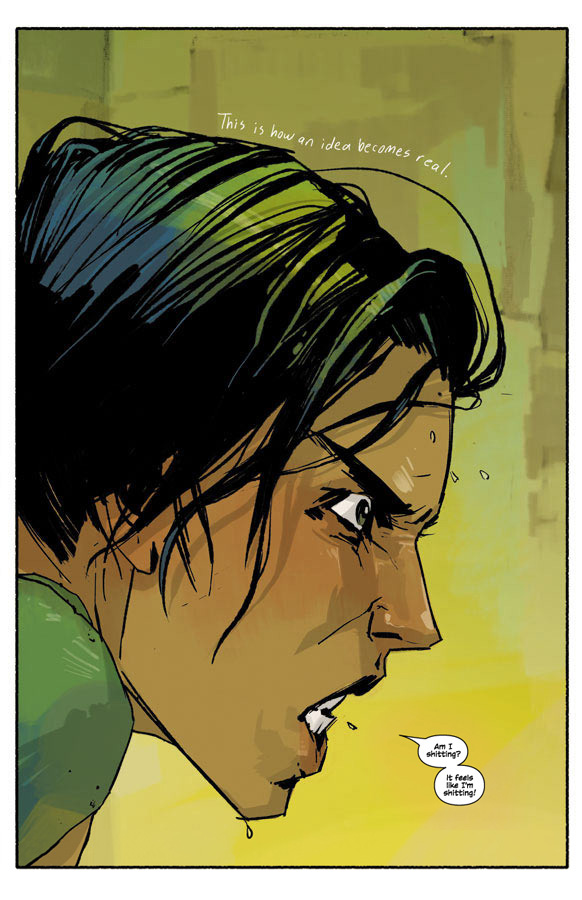
One of the best things I did in trying to deepen my understanding of the differences between writing prose and writing for comics was to open my copy of Saga Vol. 1 and transcribe the finished comic back into a script, trying to capture the visuals, emotion, and to see how much text fit on the page.

Saga, Issue #1 page 1. From Image Comics. (C) Brian K. Vaughn and Fiona Staples


Script != Finished Page != Script

The biggest challenge I’ve faced so far coming to comics writing is that the finished product is drastically different from the working document that a comics writer will produce. When learning prose writing, you can look at a piece of fiction and see the final draft as the actual product. But in comics, there’s so much of a collaboration and melding of the styles and skills of several creators (sometimes as many as six: writer, penciler, inker, colorist, letterer, editor, graphic designer) that a writer’s script is only one part of the equation. For me, that makes it harder to tease out where my part is, especially writing without having yet found any collaborators. I want to write some scripts and see how well my novelist chops translate before trying to make finished comics, and then start reaching out when I’m confident that I’ve learned the comics form well enough to start making professional works.

Basically, It’s Writer Multi-Classing

I’ve written seven novels (two of which are trunked, never to be seen again), and a long novella, as well as a couple dozen short stories. In D&D terms, I’m somewhere in the 3-5th level in terms of my Prose Writer class. But this, this is taking a new class – Comics Writer. There are different skills, different class abilities, and a whole power tree of collaboration powers for when you’re in a party with other comics creators. So while my overall Writer level combines my Prose Writer and Comics Writer levels (like a Wizard taking a level of a prestige class), my Comics Writer level is still 1 right now, so there’s a weird feeling of starting over, of going back to square one. I know a lot about storytelling, but the format, the medium is very different, and I’m having to learn to adjust to it, just like I adjusted from storytelling in RPGs to storytelling in prose.

Choosing Your Moment

Since the comics form is one where moments (panels) are compressed into a fluid narrative experience by the reader, one of the most important tasks for a creator is to chose your moments, to pick which snapshot in the action to depict in a panel, as well as how to space out your moments – several panels showing moments very close together, or jumping farther in time between panels. This is not unlike the task of scene selection in prose writing, or picking where to dramatize within a scene, but it’s very much its own thing in comics.

The Business End

I work in SF/F prose publishing. I’ve been learning about the trade publishing industry, and SF/F prose publishing in specific, for around a decade. It has certain processes, customs, and paths to publication.

Comics, unsurprisingly, is different. I’ve asked questions about submission and breaking in to creators and publisher staffers at the various comic-cons I’ve attended, and I’ve received incredibly divergent answers.

Here’s how to break in, as I’ve been told:

  • Self-publish your own works and the editors will find you.
  • Send everything you make to the editors you want to work with.
  • Pay an artist to do a whole graphic novel and then try to sell it to publishers.
  • Pitch editors with ideas and then they’ll ask for scripts. Then they’ll find you an artist.
  • Submit a complete 8-page comic.
  • Submit a full 22-page comic.
  • Self-publish for a while and then try to pitch a new project to publishers.
  • Look for comics anthology invites and start there.

As you might be able to tell, that’s a fair range. The fact that I have several novels out from traditional publishers changes the game for me somewhat, but it doesn’t give me one clear path to publication. In prose publishing, you can query agents, who then pitch to editors. There are other paths as well, but this is the ‘standard’ path. Comics doesn’t seem to have as clear a ‘standard’ path to publication. (Note that the standard path in prose publishing is often anything but easy. But it is the default, one that takes an unpublished debut work and then gets it sold to a publisher).

As you’ll note, this post says ‘Part One.’ I’ll keep talking about my experiences moving into comics writing, both to remember what the process was like, and to (hopefully) cast some light on the journey for other writers interested in moving into comics, either from a prose background or not.

Thinking Academically about Genre

At this year’s ReaderCon, I was chatting with a couple of friends and colleagues about the need for fantasy/sf books at different levels, from 100 level all the way up to graduate level (500-700), applying a US University curriculum numbering gloss. That got a positive response, and so I expanded it into a short essay, which went up on Tor.com and sparked a good amount of chatter.

If you haven’t done so yet, here’s the link to the essay. Since there’s been quite a response, I think I’ll be expanding it further, so stay tuned.

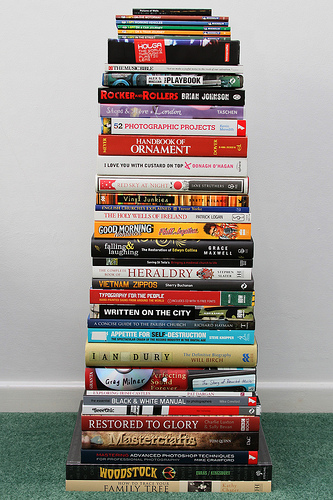
Stack of books

by Leo Reynolds – Creative Commons 2.0 (by-nc-sa)

LonCon schedule

LonCon 3 logo

Hi folks,

I hope to see many of you at LonCon 3 this week, where I’ll be supporting participating in panels, Angry Robot Authors, and having my first ever Literary Beer event at a very British hour of 11 AM. Expect publishing gossip, geekery, and/or marketing secrets.

On Wednesday at 6PM, I’ll be at Forbidden Planet for the Angry Robot/Titan event.

My LonCon schedule:

Thursday

Tolkien Society Presents: The Unpayable Debt?
18:00 – 19:00, Capital Suite 13 (ExCeL)

Friday

Diversity in Comic Books: The Good, The Bad, and the Missing
12:00 – 13:30, Capital Suite 8 (ExCeL)

Cities: Where, Who, Why? (Moderating)
18:00 – 19:00, Capital Suite 10 (ExCeL)

Saturday

Literary Beer
11:00 – 12:00, The Bar (ExCeL)

Autographing 1 – Michael R. Underwood
15:00 – 16:30, Autographing Space (ExCeL)

Sunday

The Fantastic Now
13:30 – 15:00, Capital Suite 16 (ExCeL)

I’ll also be attending the Hugo Awards as a part of the Skiffy and Fanty Show, nominated for Best Fancast! I will treasure my rocket pin for all time.

All signs are pointing toward a huge, exciting convention, and I look forward to seeing many of you there!

The Daily Deal!

Shield and Crocus is the SFF Kindle Daily Deal today, on sale for just $1.99.

This means if you’ve been meaning to buy the book and haven’t gotten around to it, today’s your day to take the plunge.

And if you’ve already bought the book, and loved it, this is a great chance to buy a copy to send to a friend who you think would enjoy it </subtle>

The KDD is a big deal in the ebook sales world, so I’d love any signal-boosting folks could give. I’ve prepared a ready-made tweet for you to ease the process:

Monsters, heroes, and a city built in the bones of a titan – SHIELD AND CROCUS, a Kindle Daily Deal for just $1.99 

Short Thoughts on the World Cup & Fencing

This last week, I watched a couple of World Cup games with my fiance and friends (Germany-Ghana and USA-Portugal).

Engaging once more with the game of football, I was transported back to my years playing in junior high. The smell of fresh-cut grass, the heat of summer, the crisp evening air, the joy of a perfect slide-tackle.

Another thing that struck me was how overwhelmingly important it is in football to be on the right foot at the right time. No fewer than three times in the USA-Portugal game, a play failed to happen because a player’s weight was on the wrong foot.

This takes me back to fencing, footwork, and tempo. Modern fencing is very double-weighted – fencers tend to have their weight split equally. Historical fencing tends to have more weight on one foot or the other, which makes it more applicable here, since when these play moments came up, almost every player was in-motion, so moving from full weight to full weight in terms of their balance.

In fencing, as in football (and tango dancing, too, but that gets to a larger blog post), it’s hugely important to know how many steps or movements it will take to get to where you’re going, and where your weight will be when you need to make a critical action, whether that’s the perfectly-timed lunge in fencing, or the critical one-touch shot-on-goal in football.

This blog brought to you by my brain relating everything to fencing.

Writing Process Blog Hop

There’ a meme going ’round, focusing on writing process. Joe Iriarte was kind enough to tag me in to take a turn.

1) What are you working on?

I’m finishing up the editorial revisions on The Younger Gods, my new urban fantasy coming toward the end of the year. It’s a bit darker and way more mythological-y than the Ree Reyes books, about the one moral son in a family of callous demon cultists. I’ve completed my second pass of this round, and now I’m going to add a couple of scenes to adjust the pacing and to clarify some worldbuilding elements. Then it goes back in for copy edits.

2) How does your work differ from others of its genre?

The biggest point of distinctiveness for The Younger Gods is probably the voice. Jacob Greene, the lead, is a character I’ve developed over a number of years, dating back to a story seed I had in undergrad. I wasn’t good enough as a writer to make that voice work, so I put the character away. I brought him back out for a role-playing game campaign, and after that, I had a good enough handle on him to write a different version in prose format, which became The Younger Gods.

3) Why do you write what you do?

The flippant answer would be ‘because I want to,’ but the more useful answer is, I think, because I am an aggregate remix of every influence, story, and experience that has made up my life. Much of my work tends to be action-driven, probably due to having grown up with action-driven video games and spending twenty years (on and off) studying martial arts.

4) How does your writing process work?

My process has changed a lot just over the almost two years since Geekomancy was published. When I first got started as a writer, I was almost entirely a pantser/gardener/discovery writer, which meant that I got a vague idea and then started writing.

No more. I’ve moved toward outlining project by project, and have been very happy wiThe last first draft I wrote of a novel was fully outlined (3-4 page outline), which I then expanded into scene by scene outlines about a third at a time, keeping ahead of my drafting. And as a result, I wrote the first draft of Hexomancy in just over four weeks. And for the next novel I write, I’m going to try to outline even better. Not outline more, but better. My hope is to do a stronger structural outline to incorporate sub-plots and balance pacing, so that my first draft is even better, so that I won’t have to do as much revision.

I don’t like the average chain-letter-meme thing, but I’d be happy to pass on the love. If you’d like to carry forward the meme, comment below and I’ll link through to your site. Applies to the first three commenters so interested. And anyone else who wants to pick up the thread is of course welcome to do so.

The PROMONADO Continues

I’m still in major promotions mode for Shield and Crocus, so here are some greatest hits of the last few days:

25 Secrets of Publishing, Revealed! (Or: Inside the Bookish Shatterdome) at TerribleMinds.

My Summer of the New Weird on Kindle Post.

I held an AMA (Ask Me Anything) at Reddit’s r/Fantasy community.

The Qwillery had me back for another interview.

As did My Bookish Ways.

Atomic Books

AND – if you’re remotely within range of Baltimore, I’d love to see you at the official launch party for Shield and Crocus at Atomic Books this Friday at 7PM.