Link to the (Recent) Past

Shield and Crocus is here, and it has brought with it a PROMONADO!

Here’s a round-up of recent goings-on in the land of Geekomancers and Shields of Audec-Hal:

Reviews:
“Underwood switches up from Urban Fantasy to New Weird secondary-world fantasy while maintaining excellent action-adventure beats…Aubec-Hal is a wondrous place, with many strange corners and facets, and excellently rendered.” —SF Signal

 “Underwood has written another fast, fun, and engaging book…Get your popcorn ready and grab a copy of Shield and Crocus. Summer is here, and summer reads don’t come much more enjoyable than this.”
Fantasy Faction

Guest posts:

My Favorite Bit at the journal of Mary Robinette Kowal

Kind words from writer friends:

Michael J. Martinez gives a shout-out and talks about the book.

Marie Brennan recalls the long history of the book (much of which she was privy to, as we go way back).

Interviews:

I was interviewed by Verushka Brow.

Last, but super-amazeballs definitely not least, I was on Sword and Laser! The interview is the last segment. I’ve been a S&L viewer/listener for years, so it was awesomely surreal to be on as a guest.

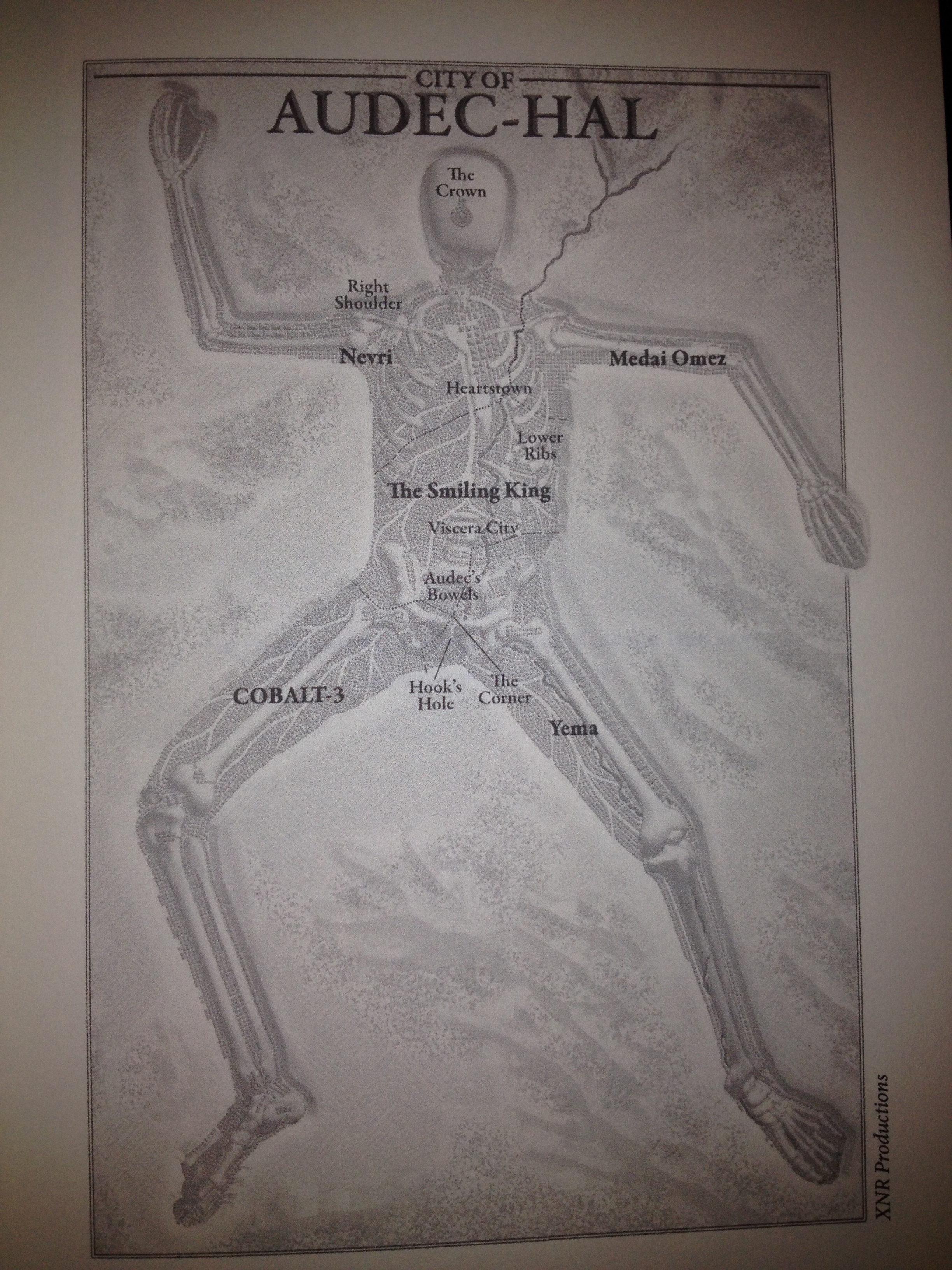
And a fun bit for folks who haven’t seen the book yet – here’s the map 47North had made (by XNR Productions):

Shield and Crocus map


SHIELD AND CROCUS is here!

Today is the day!

You can get Shield and Crocus on Amazon as well as several different bookstores. It’s also available in audiobook, performed by the amazing Luke Daniels.

If you’d like to read a preview first, Tor.com has you covered.

What have others been saying about it?

“…with Shield and Crocus, everything I love in a summer blockbuster. was contained between two covers. I think it’s safe to say that summer is officially here.”
-Eric Christensen, Fantasy Faction

“Blindingly creative, Shield and Crocus delivers action-packed, four-color fantasy with a lot of heart.”
-Michael J. Martinez, author of The Daedalus Incident

“Audec-Hal is a city where dispassionate robots co-exist with mad sorcerers and unpredictable storms that warp the fabric of reality itself. Fans of China Mieville’s Perdido Street Station or David Edison’s The Waking Engine will surely enjoy the mad inventiveness on display here.”
-Marie Brennan, author of A Natural History of Dragons

“The book is fast-paced, especially impressive considering the amount of world-building. The fight is desperate. The tyrants are villains in the truest sense. Superheroes + Epic Fantasy = Awesomeness.”
-Beth Cato, author of Clockwork Dagger

“I can’t say enough about the mythology and the world building. Underwood put a lot of thought into constructing the world of Audec-Hal, and it shows.”
-Beauty in Ruins


Phoenix Comic-Con Schedule

I will be attending the Phoenix Comic Con this week, working the Angry Robot Books booth and appearing as an author. I’ve been to New York Comic-Con twice, and I love seeing and participating in these huge celebrations of popular culture.

Aside from basking in the geekitude, here’s where you can find me:

Friday

Angry Robot Preview Panel – 12:00-1:00, North 128a

Urban Fantasy and the Real World – 1:30-2:30, North 126bc

Saturday

Drinks With Authors – 8-11PM, Renaissance Salon 5-8


And the rest of the con, I’ll mostly be at the Angry Robot Booth, #2410-2412.

Sword & Laser Hangout

I had the marvelous chance to appear on the Sword & Laser podcast for one of their Google+ Hangouts! We did the interview live on Hangouts on Air, and now the video is archived on YouTube:

I’ve been a Sword & Laser listener and sometimes participant on Goodreads for a few years now, so it was very cool and somewhat surreal to be a guest on the show.

Big thanks to Veronica and Tom for having me on!

BaltiCon Schedule

This weekend, I’ll be attending BaltiCon in Hunt Valley, MD. I’m excited to connect with local readers, re-connect with writer friends, and meet folks I’ve only spoken to online.

Here’s where you can find me over the course of the weekend:

Creating Your Universe Without Breaking Natural Laws (Panel) (Participant), Fri 16:00 – 16:50, Parlor 1026 (Hunt Valley Inn)
Pricing eBooks and why free is not always better (Panel) (Participant), Sat 09:00 – 09:50, Derby (Hunt Valley Inn)
Finding an agent (Panel) (Moderator), Sun 08:00 – 08:50, Derby (Hunt Valley Inn)
Dangerous Voices Variety Hour (Panel) (Participant), Sun 11:00 – 11:50, Parlor 1041 (Hunt Valley Inn)
Long-term Career Planning for Creatives: Surviving the Next 10 Revolutions (Panel) (Participant), Mon 08:00 – 08:50, Chase (Hunt Valley Inn)
Epublishing today (Panel) (Participant), Mon 11:00 – 11:50, Chesapeake (Hunt Valley Inn)

Will I see you there?

The Editorial Process: Part One – The Editorial Letter

My editorial letter for The Younger Gods arrived today.

For those not familiar with the process, here’s a quick summary. When I submit a novel to my editor, they read it, think, write notes, and usually send me both a letter and in-line notes in the manuscript. The in-line notes are more zoomed-in, focusing on individual moments, while the editorial letter is an overview.

For me, the editorial letter is the real gold. It’s a 5-10 page essay from a smart, invested reader, entirely oriented toward helping me make my work better. It can be intimidating. In fact, I’ve been living kind of in fear of this editorial letter, since I knew there was a lot to be done on this project.

But as I said on Twitter: Editorial letters are like removing band-aids. The fear of how much it will heart is worse than the short sting of reality.

Taking critique, even very supportive critique like most editorial letters are, can be painful.

Here’s how I handle it:

  1. Download editorial letter.
  2. Be afraid for 20 minutes, trying to do anything else.
  3. Steel self to the necessity of reading the letter.
  4. Read letter.
  5. Immediately walk away.
  6. Come back a couple hours (or a day, if you have the time) later, and go back over the letter, now that my emotions have calmed down.
  7. Start brainstorming a plan.
  8. Find someone to talk things over with. This is usually my fiance, who is a fabulous beta reader. When I can, I also talk to my editor directly, to work things through and accelerate my process of going from “How do I do all of this!” to “Here’s the plan.”
  9. Get started. And that’s Part Two, which I’ll write once I’m done with Part One for this project.

How To Write a Novel in Four Weeks

…if you’re me, writing Hexomancy.

Because that’s what I did. And I’m still kind of reeling. Hexomancy came out about twice as quickly as I’ve ever written a novel before.

Yeah, so that was a bit link-baity of a title, but this whole thing is still kind of crazy to me, so I’m still processing.

I started writing the novel on April 14th, and I finished on May 15th. I took several days off (mostly Saturdays), and had a couple of low-production days. But the net effect is that I wrote a complete rough draft of 72,326 words in 28 days of production.

Here are the factors that went in to my being able to write a complete, if short, draft in just over a month of calendar time.

1) This is the fourth Ree Reyes story, following two novels and a novella. By now, I know the characters, they have pre-existing relationships that I can leverage into lots of tension and sparks, making interpersonal scenes zoom along fairly well. I had a clear vision of what the big concept for the novel was, what the major sub-plot would be, and what the big, explosive ending would be. Those all got me very excited to write the novel, so I started with a ton of energy, writing 15K words in the first week.

2) The series is designed to be light, energetic, and action-packed urban fantasy. Much of the setting is our own world, and most of the rest of the setting I’d already created in previous books in the series. This means I didn’t have to do much world development on top of what I already had, which might slow me down as I have to create whole new systems or settings before moving on with a scene. I broke down the new settings during the outline stage, so I knew enough about each of them to flesh them out on the fly as I wrote. If I were writing sociological SF that was light on action and long on politics, I don’t think I’d have been writing anywhere near as fast.

3) Most importantly (for me), I plotted out the whole novel before I started writing. This was a chapter-by-chapter outline, though some of my chapters were more like beats, as I discovered going through and seeing places where a beat was a chapter, or a chapter turned out to be just a beat. I’ve been outlining more and more for my work, between reading Rachel Aaron’s 2K to 10K, following Chuck Wendig’s TerribleMinds, and perhaps most importantly, taking the Writing on the Fast Track class with Mary Robinette Kowal, which focused on writing fast by outlining and training for better discipline.


My next step, aside from backing the MSS up across several platforms, and sleeping, is to let the manuscript sit for about a month before I go back to do anything. I made some notes of stuff to fix while I was going, so I can start with that, then do a read-through to identify revision objectives.

But the awesome thing? My deadline to turn this novel in is mid-November, exactly six months from now. I’ve got *plenty* of time for revision, even with a super-busy summer.
#ArepaWatch report

For over a week, my home has been in a heightened state of readiness.

Of waiting. Of antici…

pation.

And then, last Saturday, I undertook a grand working.

I made arepas.

What are arepas? you might ask, and you would be one who does not know the glory of Venezuelan/Colombian (also seen elsewhere) ground maize cakes of nom, into which one stuffs delicious things.

I first had arepas at Caracas, a Venezuelan restaurant in the East Village in NYC. They also have a Brooklyn location, which is mostly the same except for their Rum Bar (!).

Arepas are great because like all good food-delivery foods, the arepa itself is delicious, as is the contents.

Thanks to a tip from Tobias Buckell, I found the right base materials:

and so began #ArepaWatch

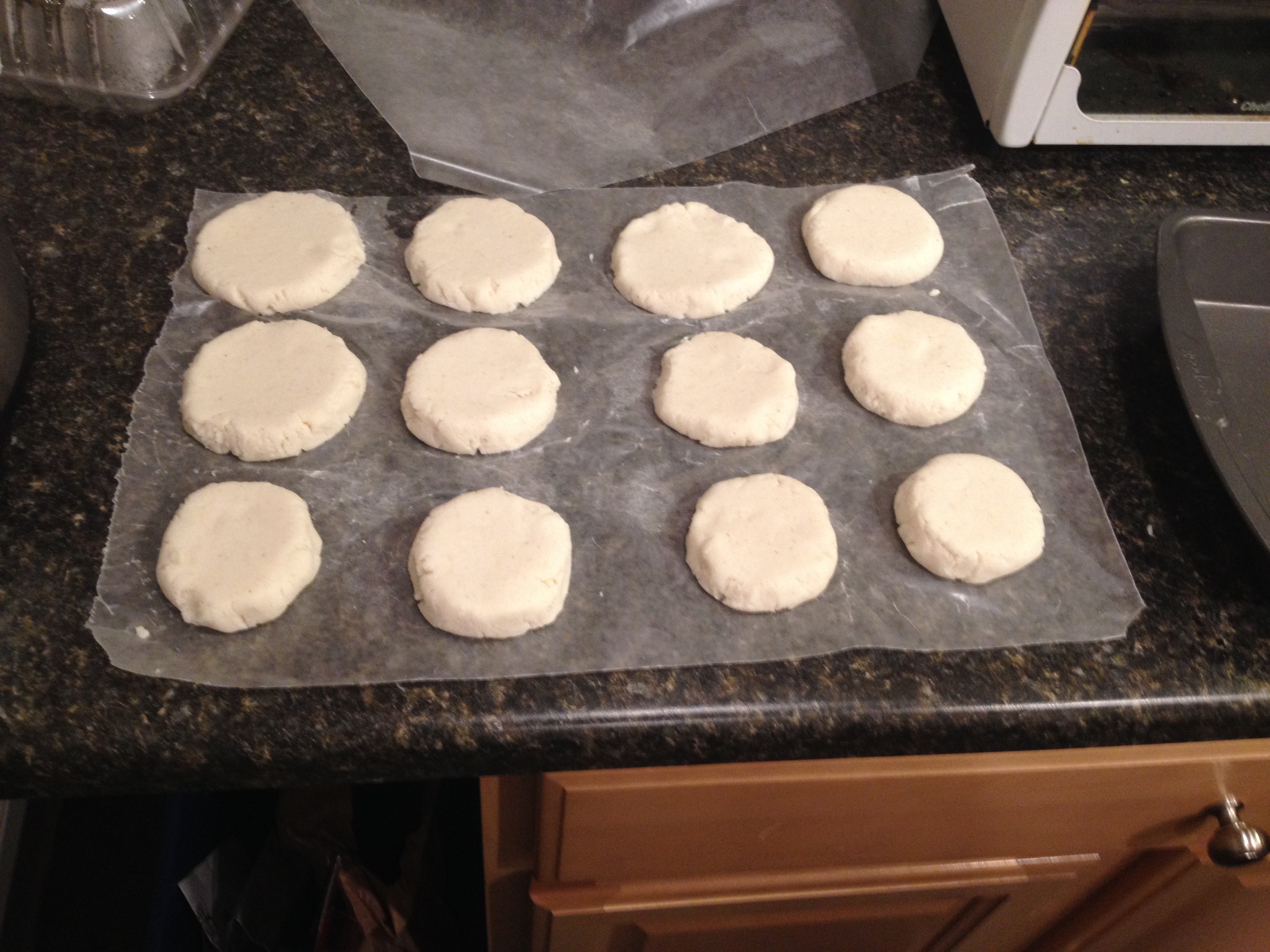
2014-05-10 20.43.33

Once the dough had been smooshed down into cooking shape, it was time to get cooking:

arepas in the skillet

Once they get cooking, they look like:

cooked arepas

And when they’re fried, you toss them in the oven for a bit more love to cook them all the way through (if one is making the thicker Venezuelan varietal, which I was.)

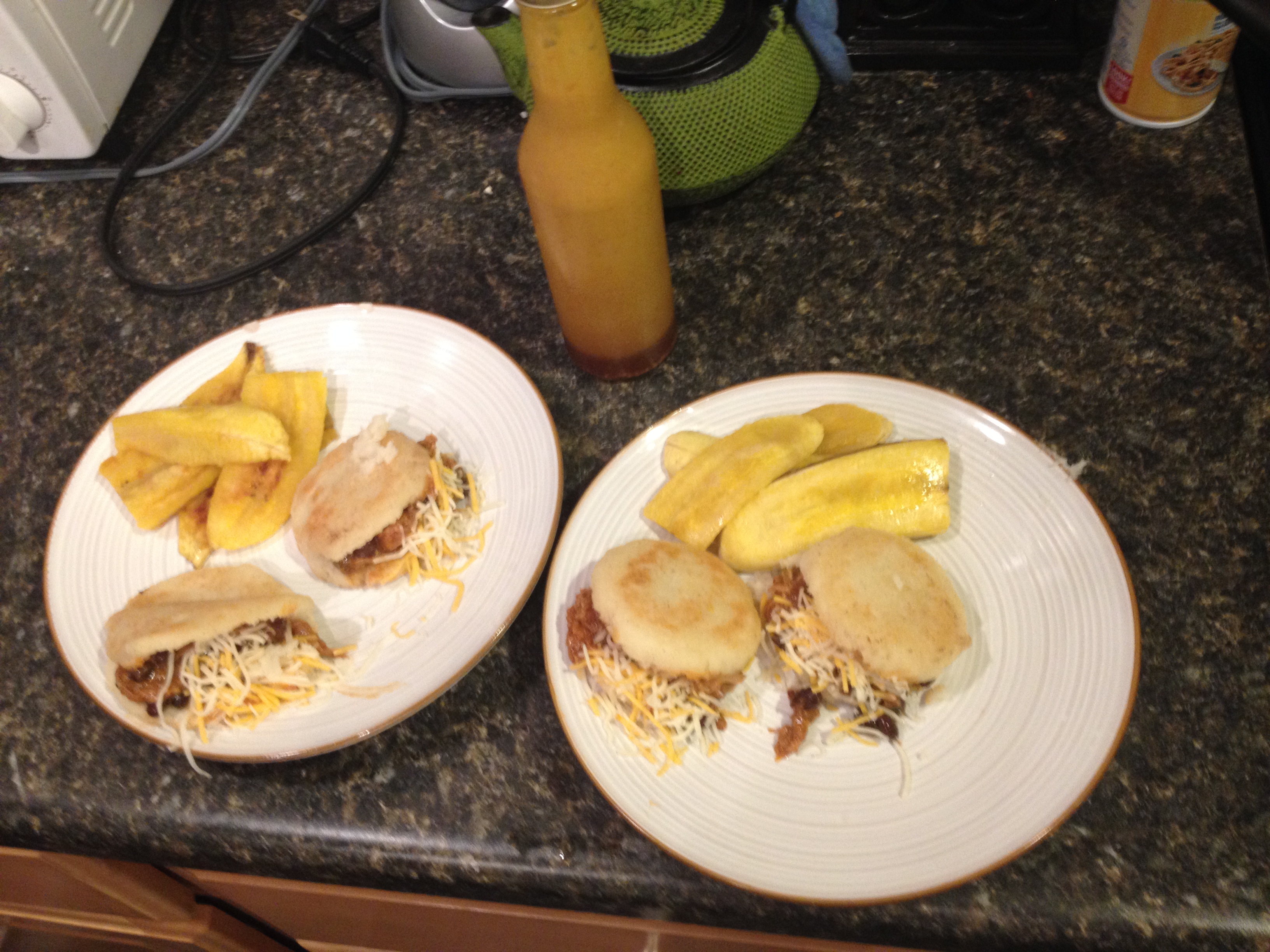
When they’re all cooked, you cut them open and add the delicious filling. I went with pulled pork, black beans, cheese, and fried plantains.

The result?

cooked and filled arepas

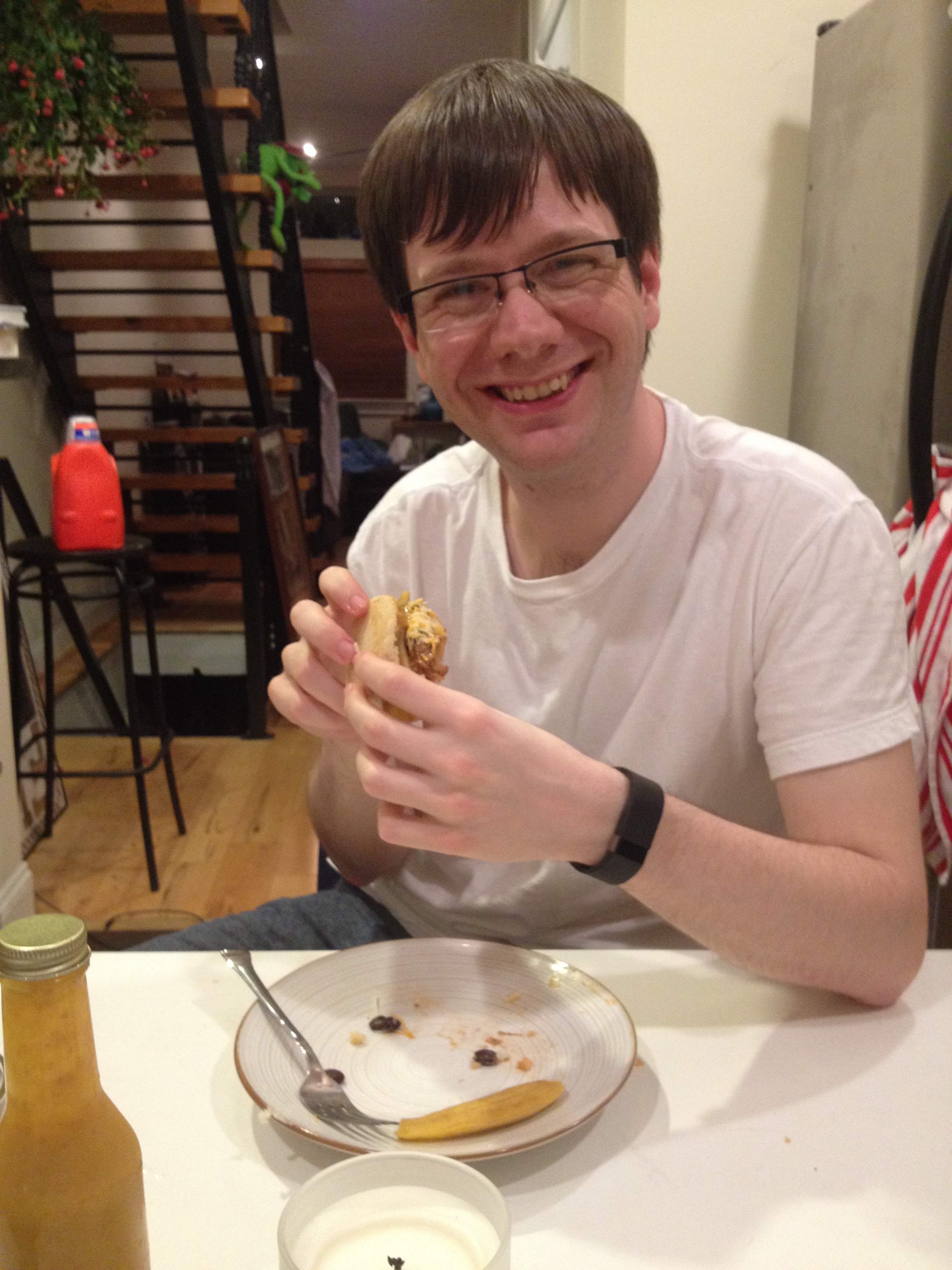
THIS WAS A TRIUMPH. I’M MAKING A NOTE HERE:

2014-05-10 21.31.47

HUGE SUCCESS.