Kickstarter Countdown

Genrenauts Twitter Card #3

The Genrenauts Kickstarter has just over 48 hours to go, and as of writing this post, has 251 backers and is $2,414 away from the first audiobook stretch goal. That is still possible, especially considering the final 48 hours of activity I’ve seen in some other Kickstarter campaigns. A lot of people will hit the star button on a campaign (next to the funding button), which then prompts Kickstarter to remind them when the campaign is 48 hours away from ending. Kickstarter’s search engine also has a ‘campaigns ending soon’ category, which we’ll be in starting later today.

The campaign’s success is already paying dividends – I published THE CUPID RECONCILIATION last week, and have commissioned the cover for THE SUBSTITUTE SLEUTH. I am also assembling notes and ideas for the cover for the omnibus edition to discuss with Sean Glenn, the designer for the campaign.

So now is the time for one last round of signal-boosting, word-spreading, and holding out the hat. With your help, I’ll be able to make Genrenauts bigger and better.

As a reminder, here are the basic reward levels:

RECRUIT ($10) – You can get the entire season one collection in ebook.

GENRENAUT ($25) – You get the print omnibus edition of the season one collection PLUS the ebook.

GENRENAUTS FIELD OFFICE ($50) – This is the reward level for retailers (bookstores) and libraries. Only applicable if you are a retailer looking to sell the book or are buying for a public/academic/school library. You’ll receive five signed paperback editions of the Genrenauts Season One Omnibus, PLUS the ebooks, PLUS eARCs of every episode of GENRENAUTS Season Two.

SPECIALIST ($75) – You get a limited signed and numbered hardcover of the season one collection, plus the ebook.

VETERAN GENRENAUT ($100) – You get a limited signed & numbered hardcover, the ebook, eARCs of episodes 3-6 as they’re available, and ebook editions of Episodes 3-6 as they publish. You also get access to a limited high-level-backers-only Google Hangout at the end of the campaign.

There are still some high-level backer rewards available that would help the campaign reach the stretch goals. They are:

NARRATIVE TRAINING ($250 – 1 available) – A detailed critique of up to 10,000 words of fiction. You also get the $100 reward.

GENRENAUT CONSULTATION ($500 – 2 available) – A detailed critique of 25,000 words of fiction, plus everything from the $100 level, and an up-to-one-hour video conference with me to talk about the story and/or publishing/etc.

DINE WITH THE GENRENAUTS ($500 – 1 available) – Everything from the $100 reward AND a quality dinner at a convention with me sometime in the next year (exact con to be mutually decided on), where we’ll talk about publishing, writing, fencing, geekdom, etc.

HIGH COUNCIL ($1,000 – 2 available) – Everything from the $100 level, and you will be credited as an Executive Producer on Genrenauts Season One, AND when I begin writing Genrenauts Season Two, you will be credited as an Executive Producer, and we will work closely together to determine the genres, plots, and tropes used in the second season. Like the High Council and the Genrenauts, you will help guide the team and their missions. As the author, I will have final say on narrative choices. You will also receive signed & personalized paperback copy of SHIELD & CROCUS, PLUS signed & personalized copies of THE SHOOTOUT SOLUTION and THE ABSCONDED AMBASSADOR, PLUS ebook copies of every Genrenauts story ever published (past and future).

And don’t forget the whimsy goals!

These are stretch goals not to unlock more Genrenauts content, but to get me to do fun and ridiculous things. Just another way of getting people excited about the campaign.

YOUTHFUL EMBARRASSMENT – If the campaign reaches 300 backers, I will record a reading of some of my early fiction, including stories written in college. It will be embarrassing, and it will be awesome.
HAMILTON COVER – If we sell out of the NARRATIVE TRAINING ($250) OR GENRENAUTS CONSULATION ($500) backer levels during the campaign, I will post a video of me covering “You’ll be Back” from the Hamilton musical. Backers will see the video first. If we sell out of both levels, I will cosplay as Balmer King George III for the performance (Balmer King George = Kitschy as hell, because Baltimore)
LIVE-TWEET OF SUFFERING – For every audiobook stretch goal we hit, I will live-tweet a ridiculous SF/F movie. Options include CLASH OF THE TITANS, STARCRASH, and LADYHAWKE. Backers will vote on which movie(s) to watch.

So again, if you haven’t backed but intend to, now is the time for action!


The New Landscape – Platforms, Crowd Funding, and More

Last November, I wrote a post called The New Landscape – Access, Discovery, and Media De-centralization. I’ve decided to call that essay the first in a series (The New Landscape), and today I want to take the topic in a new direction, jumping off of this point:

Here’s what I see as the dominant progression for a creator trying to make money from their work (visual art, music, prose, comics, video, etc.)

Level 1 – Start small, give stuff away for free, sell some stuff. At Level 1, a creator is almost totally reliant on big systems, for both discovery and fulfillment/delivery. Basically no one knows who they are, so they join larger infrastructures and services to get the word out about their material through algorithmic and organic discovery.

Level 2 – Building Audience & Relationships — At this level, it becomes viable to diversify their portfolio, maybe by selling some merch (T-shirts, mugs, stickers, patches, etc). Here, a creator can bring dedicated fans onto a growing mailing list. This level enables direct sales and stronger performance on retail sites, but the creator may still be largely dependent for discovery-enabled growth and a lot of fulfillment/delivery.

Level 3 – Big Creators – Here, creators have a dedicated audience large enough they can get a living wage directly from their base, either totally direct or through Patreon/Kickstarter. Maybe they supplement their income speaking/appearance fees etc., having a large enough platform that they are in demand not just as creators, but as entrepreneurs/thought leaders in their field. They may still use large systems, but if they do, they do so from a far stronger position – they are less dependent on any given system, since their supporter base is strong, a base that is specific and mobilized, not platform-dependent.

This three-tier system is a bit reductive, as I said in the original post, but it provides a framework for what I’d like to talk about today: the differences between services/systems for Platform Building and those for Platform Mobilization.

At the Nebula Conference, I got to meet with a representative from Patreon, who helped answer some questions I had about their company and business model. Their rep confirmed what I’d already seen from being a patron on that platform – that it is more of a Platform Mobilizing system rather than a Platform Building one.

(Note – a number of writers I admire have found some success already using Patreon to support their other writing-based income, including Saladin Ahmed, Kameron Hurley, and most recently, N.K. Jemisin, who hit and easily passed the goal she’d set to allow her to quit her day job.)

Defining Terms

Here’s what I mean:

Platform: a creator’s established body of work, professional networks, and the way that they present as a creator. A creator with a small platform may just have started releasing works, or they may not have reached a very wide audience. A creator with a large platform may be well-known for some other work before they entered a creative field, or they might have built it as their career developed. A large platform tends to come with and from a large supporter base.

Platform Building: A system or process that is Platform Building is one that includes discovery systems – good ways for people that have never heard of the creator to find them and engage with their works. Producing content is Platform Building, as every work creates the opportunity for someone to find and engage with your creative efforts. YouTube, Twitch.tv, and any retail system where a consumer can follow a creator can serve as a Platform Building system. Platform Building enables creator and consumer/reader/fan to engage through the work as well as enabling other forms of communication to strengthen those relationships.

Platform Mobilizing: A system or process that is Platform Mobilizing is one where a creator can send or bring their fans/readers/viewers/etc. in order to make a project happen or to allow more direct financial support for a project/creator. Kickstarter and Patreon are both Platform Mobilizing companies, though in different ways, to different degrees.

Example – Mobilizing for Genrenauts

I’m running a Kickstarter right now, and as of the time of writing this essay, the project is less than 10% from hitting the $5,000 funding goal (yay!) When I launched the project, I was a bit worried that $5,000 might be too high for a first Kickstarter, that maybe I needed to aim lower and then try to build momentum by over-funding.

But in reality, I hit 50% of the goal in two and a half days, largely based on existing fans and strong signal-boosting from friends and colleagues. Based on how things are going, I’m likely to hit the funding goal about halfway through the campaign, and then spend the final two weeks pushing for stretch goals. That seems like a perfectly solid way of going about things in a single-creator project.

What has surprised me is that according to Kickstarter’s dashboard analysis tools, around 27% of the pledges made to the project have come from Kickstarter’s own discovery systems. Those include their search engine, their Projects We Love recommendations, and so on. I had not expected Kickstarter to provide so much discovery. I’d estimate that close to a third of the backers on the project had not heard of me before launch. This, in my opinion, means that I’d substantially under-estimated Kickstarter’s utility as a tool for not only Platform Mobilizing, but also Platform Building. There are going to be notably more people invested in the Genrenauts series when this campaign completes than when it had started.

Given the opportunities involved, any Platform Mobilizing system that uses a crowd-funding approach like Kickstarter will likely be working on building in some discovery systems. The company benefits if people come to trust their system as a way of discovering amazing new content, and the creators benefit from crowd-funding with a system that helps do more than just facilitate a direct mobilization of existing fans/readers/viewers/etc. And it definitely works for me as a consumer, too – I’ve backed a fair # of projects that I only heard about through Kickstarter’s search system. Patreon’s discovery tools, in my experience, are more nascent, and have a ways to go. The company is also much younger thank Kickstarter, so this is to be expected.

The Inevitable So What

Here’s why I think this is a useful framework: I’ve been following Kickstarter and Patreon each since pretty early in their public histories, and trying to study what they can and do offer to creators. In publishing we have this idea of The Discoverability Problem, which is that it is getting harder for individual creators to have their work discovered, which makes it harder for new creators to find a following and build a sustainable career. There are so many books being released (largely due to digital self-publishing) and more releases means that there are more works to choose from. In publishing, the loss of shelf space from the closing of Borders and the lessening number of indie bookstores in the USA (a trend that has thankfully reversed, as we’re seeing new strong indies doing a great job around the country) means that writers are posed with discovery being an ever-greater problem.

One of the best ways to be discovered is to build your platform. The more people know you and have positive associations with you, the more chances you have to sell your work.

With the proliferation of social media, there are ever-more places creators can go to try to build their platform. You can be on Instagram, Tumblr, or Snapchat, as well as older systems like Facebook, YouTube, Twitter, etc. Social media channels are a well-trod way of building platform – incrementally growing your readership/tribe/etc. by consistently entertaining, informing, or whatever you choose to do. This form of Platform-Building tends to take time and a lot of effort. The first few people to any platform will be far more likely to benefit from it, growing their profile as the platform grows.

But any one media company can come or go – the fortunes of a social media company rise and fall. LiveJournal and MySpace are mere shadows of what they once were. Facebook lists on, and Twitter is harried by largely-unchecked abusers and the continual frustration of not being able to edit a typo out of a tweet that’s raking up RTs.

If a creator gets in deep with a single platform, their ability to connect with their fans/readers/etc. is bound up in that company’s fate. This is why people have been harping on and on about email lists/newsletters – if you bring you audience to a system that is much more directly under your control, that ability to connect is much more robust.

And from a mailing list, you can then direct your fans to a new platform, mobilizing them in order to help make a project happen.

This is why I see Platform Building systems as mostly being oriented toward Stage One and Stage Two (see the framework from the earlier post), and that Platform Mobilizing systems are more effective for later Stage Two and Stage Three. It doesn’t seem terribly viable (at least right now) to start a brand-new creative career by going directly to Patreon as your main way of interacting with fans/readers/etc.. For the most part, the people succeeding on crowd-funding/crowd-patronage systems are those with proven success and/or an existing fan-base. But once you have those connections and have earned that support, systems like Patreon and/or Kickstarter can let a creator provide an opportunity for fans, and especially super-fans, to go the extra mile in supporting a creator.

21st Century Creative Economics

Here’s another way we can express this:

Most of my books are available digital-first, from $2.99 to $5.99 per book. I also have paperbacks for $12.99 to $14.99. I don’t have any books out in hardcover, so $15 is the highest price for any of my books. If I have a super-fan who absolutely adores my works and will buy anything I publish, but I only ever ask $2.99 to $15 for my work, then they’ll buy as many of those as I can produce, but maybe I won’t actually provide them with an opportunity for them to support me to their satisfaction.

Then I launch my Kickstarter, with a $100 backer level, and they pick it in a heartbeat. They get a lot out of being able to directly support me and the extra rewards I offer above and beyond the book. And I get a big chunk of $ toward my project, plus a way to engage directly with a major supporter.

This is, I think, the source of one of the big appeals of Kickstarter and Patreon: With those company’s business models, I can offer a wider range of commercial interaction possibilities, and find places where the existing mix of products doesn’t satisfy a fan/supporter’s interest. If I have a fan who makes a really good living and wants to be able to help support me, if I make it easier for them to get more out of supporting me, we might both be able to win – me from greater financial support, them from getting more content from me, more direct interaction, and/or more insight into how I make my art.

This is another way to diversify your portfolio as a creator – offer a lot of different ways for people to support you – ebooks, paperbacks, audio, crowdfunded support, large-ticket experiences (critiques, Google Hangouts, etc.), and so on. And offering that wider mix you may find that you’re not only making more $, you’re giving readers/fans/etc. more chances to connect with you and your work. The perfect overlap of Platform-Building and Platform-Mobilizing.


Speaking of that Kickstarter, please check out the campaign and see if you’d like to join over 180 people helping me realize my creative dreams:
Ebook pricing Storify and the Cult of the Debut

Today just before lunch, I saw this story on Publishers Weekly. Which reminded me of other reports like this one from the New York Times. But there’s a lot to *why* these reported print #s are likely dropping, and a lot these reports leave out. Which is where this discussion started.

I’d also like to say a bit more about the Cult of the Debut. This is a huge thing in publishing. Authors, Agents, Publishers, Reviewers, Booksellers, nearly everyone in publishing is culpable here. We all participate in the Cult of the Debut. The shiny new author, the undiscovered gem, the instant phenomenon new voice that will Revolutionize Publishing, so on and so on. Houses get into huge bidding wars over debuts they think will be the Next Big Thing, spending millions and millions of dollars on an unproven author.

And as authors, we get so worked up about The Big Debut. We see our colleagues getting six, seven figure deals out of the gate, and we despair, thinking we’ll never have the career they’re going to have. We fetishize the Big Debut as the One True Path to writing success? When in reality, a lot of those big debuts fail, and a lot of authors that do end up becoming bestsellers do so by building an audience over time.

VE Schwab just hit the NYT list with A Gathering of Shadows, the second book in a series, and her ninth book overall. She built an audience over six years, bringing her YA audience to her adult series. She has put the work in over time, alongside her publisher, to make this success happen. Stories like Schwab’s are far more achievable, far smarter of a strategy (even with the extraordinary circumstances of her film and TV deals, which are impressive and laudable in their own right), in my opinion, than throwing big stacks of money at debuts and hoping to win the lottery. Schwab has proven her work to be a good investment, has fostered a strong fan base, and now she is reaping the rewards. This is how to succeed without the Cult of the Debut.

Some people do debut right onto the NYT list. My agency-mate Jason M. Hough did with his novel The Darwin Elevator, but that happened because he busted his ass writing all three books in the trilogy so they could be released back-to-back-to-back, so his publisher had all the ammunition in the world to push the book hard. And then? It hit the NYT list probably in no small part to getting a very strong NPR on-air review during drive-time. But there’s no way to guarantee that kind of buzz or support. You make your bets, you give books everything you’ve got, and you pray. Sometimes the magic works, and sometimes, a big advance is the last advance you’ll ever see.

Me? I’m a career slugger so far. I do the work, I write pretty quickly, and I promote the ever-loving crap out of my work by being active online and at conventions. I refine my process, I look at what in my list is working and what isn’t, and I try to focus on writing to where my existing readers are – the pop-culture-savvy action/adventure kind of story.

A lot of writers carve out solid careers for themselves without ever hitting a Bestseller list, without ever getting a major award. They write, they make smart choices about what books to write when, and they find good publishing partners. They develop their careers deliberately, thoughtfully, and by making good bets. Publishers can and often do this, too. But publishers are still frequently distracted by the Cult of the Debut.

And this focus on debuts goes all the way down – Big Debuts get the budget, so they get the support. Which means they get more ARCs, more ads, more events. They get more time during presentations to buyers and librarians, which means they get more exposure to readers and reviewers. All the while, career writers, the long-term proven creators, just hammer out incrementally stronger books, trying to build their audiences organically because they’re not the New Hotness anymore.

We can all do better. Debuts are fun, and it’s exciting to be the person to spread the news about a brand-new author, but there’s a lot to be said for the experience and honed skill of a veteran writer. That’s what I’m hoping to become. It’s not as sexy a role, but it’s far more realistic.


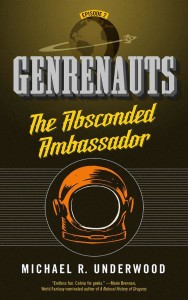
My latest book is The Absconded Ambassador, Episode 2 of the Genrenauts series. The Genrenauts are a group of storytellers that travel to dimensions informed by fiction genres to find and fix broken stories in order to protect their home world.

The Absconded Ambassador

The Genrenauts Life

Life right now is pretty Genrenauts-tastic. I’m working on final edits for Episode 3, Ep. 4 is off for edits soon, etc.

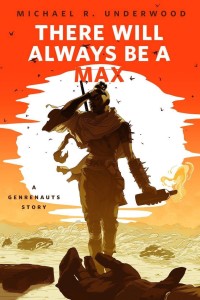
And “There Will Always be a Max,” a Genrenauts short, is coming to Tor.com on April 6th.

There Will Always Be a Max cover (by Goñi Montes)

Which means, with the release of THE ABSCONDED AMBASSADOR very fresh in my mind, I have some things to say and people to thank, which I did largely on Twitter, but will repeat here:

The Absconded Ambassador is dedicated to Dave Robison, an OG (Original Genrenaut), for helping me develop the core premise of the series at a critical juncture, and for his ongoing contributions to the genre in fostering community and helping writers develop their voice and craft.

I lift a Neon Space Drink (TM) to my editor Lee Harris, who took a chance on the series and helped me bring this vision into the world.

I’m also very grateful to Irene Gallo, Christine Foltzer, and Peter Lutjen for creating the cover design and series style for Genrenauts, reflecting the genre love and playfulness of the series.

My Copy-Editor, Amanda Hong, kept the alien species consistent, made sure I kept the timeline clear,  and in general polished the book to look better than it had been before.

Katharine Duckett has done a fantastic job spreading the word about the series and helping me get it into the hands of people far and wide. Thanks also to Mordicai Knode and Carl Engle-Laird for their assistance along the way.

I am so delighted to be a part of the Tor.com Publishing experiment, and the campaign to show that #NovellasAreTheNewNovel.

And speaking of #NovellasAreTheNewNovel, Matt Wallace has been a great supporter of the series, for which I am very grateful. Thanks, brother.

My agent Sara Megibow is the Opener of Doors, the Herald of Awesomeness, always there to help me plow throw when things get rough.

Every book I write is a love letter to the stories that have inspired me, and a suggestion of how we can move forward. As an Ex-Academic, most of my books so far have been my way of taking what I have to say about the genre and the world and putting it into story form. Never has this been more the case than in Genrenauts. I’m really excited about the characters of this series and what they have to say.

Writing Genrenauts has already helped me stretch my skills and learn to write more thoughtfully, more energetically, and more flexibly. (That ONE SECRET FOR WRITING SUCCESS everyone asks about? It’s actually lat stretches. Keep that between you and me.)

And the response so far has been very exciting. Here are some of the reviews for the series:

“This is fun…Readers will be looking forward to Leah and company’s next trip to a story world.”
Library Journal

“It’s an entertaining enough concept, and the diverse cast of characters is a nice change of pace.”
Publishers Weekly

“It’s storytelling as heroism, genre savviness as power. Endless fun.”
Marie Brennan, World Fantasy Award-nominated author of A Natural History of Dragons

“A clever, exciting, and seriously fun twist on portal fantasy that sends a geeky stand-up comedian into the Wild West. Sign me up to be a Genrenaut, too!”
Delilah S. Dawson, author of the Blud series, Hit, and Wake of Vultures, written as Lila Bowen

“My favorite new TV show of 2015 isn’t on TV, it’s in the pages of Mike Underwood’s Genrenauts. Deeply funny and creative, shrewdly insightful, and thrillingly paced, every pop culture diehard will want to keep living vicariously through the characters in this series.”
Matt Wallace, author of the Slingers Saga and Envy of Angels.

“I have this sinking feeling that the Genrenauts series, with its raucous meta-commentary upon the stories of pop culture, is going to say important things that I might not be clever enough to catch the first time around because I’m too busy enjoying the books.”
Howard Tayler, Hugo Award winner and creator of Schlock Mercenary

“…a rollicking exploration of western tropes, with hints of a larger conspiracy afoot. Underwood has plans for a lot more of these, and I can’t wait to read them.”
Joel Cunningham, B&N Sci-Fi & Fantasy Blog

and for Episode 2,

“The second episode in Michael R. Underwood’s Genrenauts delivers on the promise of Episode 1, and demonstrates that his special alchemy of Leverage + The Librarians + Quantum Leap + Thursday Next (just my current guess at his secret recipe) has legs — and will hopefully go a long time.”
– Irresponsible Reader

“…it’s a heck of a lot of fun the way Galaxy Quest is: a little goofy, a little serious but not taking itself too seriously, and filled with a fondness for the source material that gives it weight without weighing down the story.”
Samantha Holloway, New York Journal of Books

it offers a wonderfully creative premise: Fictional stories are really alternate universes in which problems bleed over into our would and cause calamities here.
Leah Hansen, RT Reviews

In closing, I hope you’ll join Team Genrenauts and see where the story goes next.


The latest Genrenauts story is The Absconded Ambassador. Weird aliens, diplomatic wrangling, space dogfights, genre ruminations, and more:

The Absconded Ambassador

Birthday giveaway

Hello, all!

Today is my 33rd birthday, and as has become my custom, that means it’s time for Hobbit Birthday, which involves me giving you presents. And this year is extra-Hobbit-y, since Frodo turns 33 in the start of The Lord of the Rings.

Please comment below with a favorite birthday memory to be entered to win the following prizes. Please also tell me if you’re in North America (for ease of shipping).

World-wide:

2x ebook copy of The Shootout Solution
1x ebook set of The Shootout Solution and The Absconded Ambassador

NA-only:

2x Signed & personalized paperback copy of The Shootout Solution.
1x Signed & personalized paperback set of The Shootout Solution and The Absconded Ambassador
1x signed ARC of Shield and Crocus

Genrenauts Combined

Please comment by 11:59PM EST today (the 24th) to enter, then keep an eye on this post tomorrow to see if you won!

Award Eligibility Post – 2015

So – awards and award eligibility – some people hate eligibility posts, but this is my blog, so they can deal. 🙂

Here’s what I did in 2015, and how it would qualify in award categories – Hugo, Nebula, Locus, World Fantasy Award, etc.

Best (Fantasy) Novel

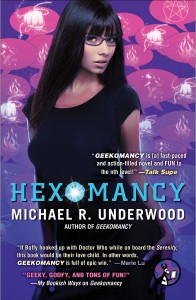
Hexomancy cover

Hexomancy

The fourth story (third novel) in the Ree Reyes urban fantasy series, where fandom and love of SF/F is its own magic system. This is the novel I’m proudest of so far – I think it represents a leveling up across several craft elements, including capping off the first major story arc for the series.


Best Novella

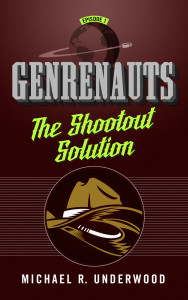
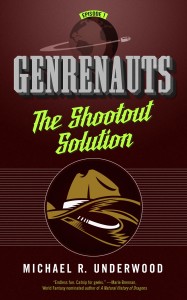
The Shootout Solution cover

The Shootout Solution

Episode one of the Genrenauts series – about a group that travels to genre-informed dimensions to find and fix broken stories in order to protect their version of Earth. This kicks off the series which I hope to be writing for the next few years – it’s fun, its wacky, and it delivers both adventure and analysis of why and how we tell stories.


Fancast

skiffyandfanty4_banner_web

Skiffy & Fanty


SpeculateBanner9

Speculate!

In 2015, I joined the cast of Speculate! while continuing to work with the Skiffy and Fanty Show, which was nominated for Best Fancast in 2014. Both are fantastic shows, and, in my opinion, fill different but important niches in the SF/F podcasting community.


Special Award – Best Professional (World Fantasy)

Michael R. Underwood – For work at Angry Robot

In my experience, Best Professional almost always goes to a Publisher or Editor, but there’s nothing that says that a Sales/Marketing Manager couldn’t be nominated and win. I worked closely on supporting every one of Angry Robot’s 2015 releases, including two Phillip K. Dick Award nominees, the Campbell Award winner, and more. A long shot, but worth mentioning, since this is my blog.


Fan Writer

Most of my non-fiction in 2015 was more professional than fannish, but I leave it to you, the voter, to decide what you like. Here are some of the best of the best from me in 2015:

Year in Review – 2015

So, it’s the last day of 2015. That calls for some reflection.

Personally, 2015 was a big year for me. First and foremost, I got married to the love of my life, and we were so excited that we held two receptions! It was a ton of work to organize both, but getting to share the joy with family and friends that wouldn’t be able to travel was definitely worth it.

MikeMegWedding-055 (1)


MikeMegWedding-079 (1)


2015 was a busy year in writing as well. I finished Season One of Genrenauts, revised the first three episodes, and developed other projects which are in various stages of secret activity even now.


Hexomancy cover

September saw the release of Hexomancy, the fourth Ree Reyes story, wrapping up the first arc of that series. It’s been met very positively by fans, and has me excited to move on to the next part of Ree’s story as soon as possible.


The Shootout Solution Final

And then in November, I launched Genrenauts season one, beginning with The Shootout Solution, from Tor.com Publishing. We were able to book Mary Robinette Kowal to perform the audiobook, and I couldn’t be happier. My agent and I partnered with Macmillan Entertainment to manage TV/Film rights for the series, which I think is by far my best shot so far in that field.

I’m very pleased with the series, and excited to continue it in 2016. And I have so many ideas of other things to do with the world – an RPG, comics, a board game, etc.

Work

AR Logo with Lettering

Angry Robot emerged from its Interregnum in March, and has been kicking ass and taking names once more. We had popular, buzz-worthy releases, award nominations, and strong sales. We signed up some incredibly exciting novels by amazing writers, and got the word out about our ongoing, beloved series. And for my own part in the team, I started writing art briefs and working with artists, as well as working on a new Thing that is currently secret but very exciting.


Geekdom

This was a big year in Geekdom. Just with Mad Max: Fury Road and Star Wars: The Force Awakens, we had two huge, impressive new offerings in genre-defining series, each bringing a breath of fresh air in terms of representation. I’ve spoken a lot about those films, so I don’t feel like I need to go on at great length here.

2015 was also the year I got into Steven Universe and Hamilton, it was the year of Daredevil, Jessica Jones, Agent Carter, Supergirl, The Unbreakable Kimmy Schmidt, and more.


I also joined Speculate! The Podcast for Writers, Readers, and Fans in 2015, and have been talking with Greg Wilson, my other active co-host, about cool things we can do in 2016, which has me very excited.

Favorite Things

Here are a few more things that rocked my world in 2015, just for fun – there’s a theme here:

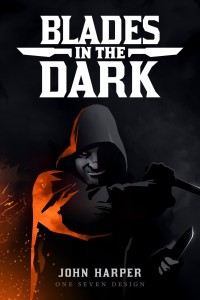
Blades in the Dark

Blades in the Dark is a dark fantasy cloak & dagger RPG by John Harper, in the design lineage of Apocalypse World, but distinctly its own. It cites Dishonored, the Vlad Taltos books, Fafhrd and the Grey Mouser, and the Thief game series as its major touchstones. BitD was Kickstarted to great effect this year, and the core book is due early 2016. It already has a very active Google+ community, so if an RPG about a group of scoundrels building a criminal empire appeals to you, check it out.

RPG Actual Plays

titansgraveSmall-241x160

Another thing that delighted and surprised me this year was the rise in prominence of streaming tabletop RPGs. From Geek & Sundry’s Critical Role to Actual Play Podcasts like Friends at the Table, produced RPG video like Wil Wheaton’s Titansgrave, and Roll20 Presents games like Apocalypse World, consuming RPGs as entertainment has become far more mainstream, and I love it. As a guy who wrote his M.A. thesis on Tabletop RPGs, one of the things I wrote about was how RPGs’ mass appeal was limited because the performers were also the entirety of the audience. With these streamed and recorded games, we’re seeing more attention for the form as performance, as narrative to be enjoyed by more than just the participants. It’s super-cool, and I can’t wait to see more.


Looking ahead

2016 is already shaping up to be a big year for me – The Absconded Amabssador releases in February, I’ve got stories in two anthologies that will be Kickstarting over the course of the year, and I’ll be attending a ton of conventions for Angry Robot and my own writing. Add my current Sekret Projects to that and it’s going to be a doozy. More on 2016 tomorrow.

Until then, thanks to everyone who bought my books, wrote reviews, talked my books up to their friends, hung out with me at conventions, whiled away the hours on Twitter or Facebook, and more. Thanks for everything you’ve done to make 2015 a great year in so many ways, and here’s to making 2016 even better.

Genrenauts Giveaway

The fine folks at Tor.com are giving away three copies of Genrenauts: The Shootout Solution on Goodreads. Enter here

The Shootout Solution cover

Here’s a round-up of reviews to get you psyched to enter:

“This is fun…Readers will be looking forward to Leah and company’s next trip to a story world.”
Library Journal

“It’s an entertaining enough concept, and the diverse cast of characters is a nice change of pace.”
Publishers Weekly

“Who hasn’t wanted to imagine themselves parachuting into a story gone wrong and putting it back on track? It’s storytelling as heroism, genre savviness as power. Endless fun.”
Marie Brennan, World Fantasy Award-nominated author of A Natural History of Dragons

“A clever, exciting, and seriously fun twist on portal fantasy that sends a geeky stand-up comedian into the Wild West. Sign me up to be a Genrenaut, too!”
Delilah S. Dawson, author of the Blud series, Hit, and Wake of Vultures, written as Lila Bowen

“My favorite new TV show of 2015 isn’t on TV, it’s in the pages of Mike Underwood’s Genrenauts. Deeply funny and creative, shrewdly insightful, and thrillingly paced, every pop culture diehard will want to keep living vicariously through the characters in this series.”
Matt Wallace, author of the Slingers Saga and Envy of Angels.

“…a rollicking exploration of western tropes, with hints of a larger conspiracy afoot. Underwood has plans for a lot more of these, and I can’t wait to read them.”
Joel Cunningham, B&N Sci-Fi & Fantasy Blog

“A wonderfully executed idea that uses the strengths and background of the writer to great effect.”
Paul Weimer, SF Signal

The Shootout Solution is Genre blending fun.”
Fangirl Nation

“A Tardis of a novella, The Shootout Solution is packed full of ideas… The possibilities are endless… Tor.com continues to blaze a bookish trail in terms of both originality and diversity. More like this, please.”
Geek Syndicate

“Snappy dialogue, twisting plot turns, and efficiently written action scenes combine with a strongly realized protagonist that reminds me of a old friend from my art school days, not a cardboard cut-out of the “strong female character” trope.”
Polychromantium

While the book is short (it is a novella after all) I could not help but get sucked right into the concept. Everything is explained just enough to get me going. The characters are great and interesting, and they included both our main character who is an Asian Female (this is rare as hell) and even had a Transgender lady (male to female). It comes up briefly, and then just moves right on. Its well done, and fun.
Page Turners, Inc.

“I enjoyed this book tremendously. Leah is a smart, savvy, snarky young woman whose character nicely balances the calm goodheartedness of Shirin, the experienced competency of King, and the attractive cockiness of Roman. They make a great team.”
Fang-Tastic Fiction

“I can see this really appealing to readers who are into browsing TV Tropes, or who liked Ready Player One but want a more satisfying experience.”
One Last Sketch

“We like nerdy Leah and were able to immediately identify with her. She should return for many more episodes!”
Exploding Spaceship

“It’s got a clever, rather cool central idea. It has a plot built around that which keeps up suspense, whilst giving you a protagonist to care about, portrayed well, in a world which feels believable – perhaps by virtue of the setting for that world. I’d like to see more of all of the characters, and really, more of the setting in general, but that’s more recommendation than complaint!”
Sci-Fi and Fantasy Reviews


And here’s that link again to enter the giveaway.


What Star Wars Means To Me

I saw The Force Awakens again yesterday. And I loved it with every fiber of my being.

I am the person and writer I am in no small part due to Star Wars. I know I’m not alone in this. I’m not claiming to be singularly influenced in a deeper way than anyone else, yadda yadda. But here this is my story. There are many like it, but this one is mine.

I don’t remember a time when I hadn’t seen Star Wars. Its structure and tone has left an indelible mark on me.

Continue reading

Big Star Wars Ramble & Discussion

Hi folks – I just saw Star Wars: The Force Awakens on Sunday, and now am looking to chat – in a way that keeps spoilers off of social media feeds.

TL;DR review – I loved it.

Therefore, I thought I’d put up this blog post so folks could talk all things TFA without risk of spoiling friends and fellow internet denizens.

That said, everything in the film is fair game from here below, including comments.

You have been warned.

Continue reading